Writing a proposal from scratch for every prospective client is one of the more tedious parts of freelancing, which makes it a natural target for AI assistance. General-purpose assistants like Claude and ChatGPT, along with proposal features built into tools like Bonsai, can genuinely speed this up — but only for specific parts of the job. Used carelessly, an AI-drafted proposal can also actively cost you the project.
- Use AI for structure and first-draft wording, and write the specifics, examples and price yourself.
- Never send a proposal that contains claims about your work that you have not checked.
- Read the final version aloud; generic phrases are easier to hear than to see.
What AI is genuinely good at here
Structure and formatting
A proposal needs a predictable structure — scope, timeline, deliverables, pricing, terms — and AI is reliably good at generating that skeleton quickly from a short brief, saving the blank-page problem that eats the most time for many freelancers.
Adapting tone for different audiences
The same project might need a more formal proposal for a corporate client and a more conversational one for a startup founder. AI handles this kind of tone adjustment well once you give it a clear sense of the audience, which is genuinely useful when you're sending proposals to a varied client base.
First-draft speed
Getting from "nothing" to "a rough but complete draft" is where AI adds the most real time savings — turning what might be 45 minutes of staring at a blank document into 10 minutes of editing an already-structured draft.
Where it goes wrong
Generic value propositions
AI-generated proposals, if not heavily edited, tend to describe value in the same generic language every proposal-writing tool produces: "streamlined process," "tailored solutions," "proven results." Clients who receive multiple proposals notice this sameness immediately, and it reads as low effort rather than efficient.
Fabricated specifics about your own work
This is the most important risk. If you ask an AI tool to describe your past results, experience, or case studies without providing the actual details, it can generate plausible-sounding but inaccurate claims — a specific percentage improvement you never achieved, a client industry you've never actually worked in. Never let AI-generated content about your own track record go out without verifying every specific claim yourself.
Pricing that doesn't reflect your actual reasoning
AI can format a pricing section cleanly, but it doesn't know your actual cost structure, your read on this specific client's budget, or how this project compares to your other work in complexity. Pricing decisions should stay entirely yours — treat AI-suggested numbers, if a tool offers them, as a prompt to think it through rather than a number to accept.
A workflow that uses AI without the downsides
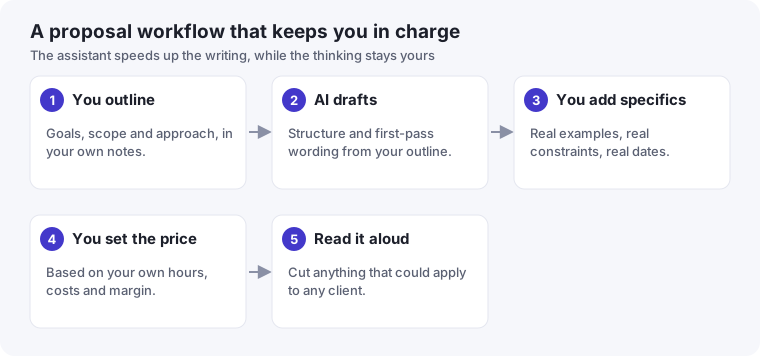
- Write a short, honest brief yourself: the client's actual situation, what you'll deliver, and your real pricing logic.
- Use AI to generate a structured first draft from that brief — not to invent the substance, only to organize and phrase it.
- Edit every specific claim about your experience or past results against what's actually true.
- Rewrite the opening and closing paragraphs yourself, in your own voice — these are the parts most likely to read as generic if left untouched, and the parts a client remembers most.
Used this way, AI removes the tedious structural work from proposal writing while leaving the parts that actually determine whether you win the project — accuracy, specificity, and genuine voice — firmly in your hands.
How this fits with templates
It's worth distinguishing AI-assisted drafting from the templated structure covered in our templates versus custom workflows guide. A strong proposal template already handles most of the structural work AI is good at — sections, formatting, standard terms — which means AI's biggest contribution for a freelancer with a solid template is really in adapting tone and phrasing for a specific client, not in generating structure from nothing each time. Freelancers without an existing template get more raw time savings from AI; freelancers with one already get a smaller, but still real, boost.
When to skip AI assistance entirely
For a small number of your highest-stakes proposals — a dream client, an unusually large project, a referral from someone whose opinion matters a great deal to your business — it's worth writing the proposal fully yourself, even if it takes longer. Not because AI assistance would necessarily produce a worse document, but because the process of thinking through the client's specific situation from scratch often surfaces details and framing that a faster, AI-assisted draft is more likely to skip past. Reserve full AI assistance for the routine proposals where speed matters more than the last increment of customization.
Tracking what actually converts
If you're sending enough proposals to make it worth tracking, note which ones use a heavier AI-assisted draft versus a fully custom one, and compare acceptance rates over time. This turns an open question — whether AI assistance is helping or hurting your close rate — into something you can actually check against your own data, rather than relying on a general impression either way.
Give the assistant what it needs
The most common reason an AI-drafted proposal reads as generic is that the request was generic. A short, structured brief usually produces a far better first draft. Include your role and services, the client's business and problem in a few sentences, the scope you are proposing, the timeline, and the tone you want (for example, friendly but professional). Tell the assistant not to invent facts about you, and to mark anything it is unsure about so you can fill it in. Then treat the result as a rough draft to rewrite, not a document to polish.
A review checklist before you send
- Is every claim about my experience true? Remove any project, result or number you cannot back up.
- Does it mention something only this client would recognize? If you could swap in another company's name, it is too generic.
- Is the scope precise? List what is included, what is not, and how many revisions are covered.
- Does the price follow from the work? You should be able to explain each figure without checking the draft.
- Are the next steps obvious? Tell the client exactly what to do to say yes.
- Does it sound like me? Replace stiff phrases with the way you would say it on a call.
Spot the filler
AI-written text has recognizable habits. Watch for opening lines that praise the client's company without saying anything specific, lists of benefits that could apply to any service, and closing lines that promise "exceptional results" or a "seamless experience". Replace each with something concrete: a sentence about their situation, a specific deliverable, or a realistic timeline. Clients read many proposals, and specificity is what separates yours from the pile.
Keep a proposal log
Record each proposal you send, including whether you used AI for the draft, the price, and the outcome. After a couple of months, you will have your own evidence about what works, which is far more valuable than general advice. If proposals that took longer to personalize win more often, that tells you where your time is best spent.